
Care After Dental Implant Surgery
How to protect your new implant and heal smoothly.
Good aftercare ensures your implant integrates successfully. The first days are the most important.
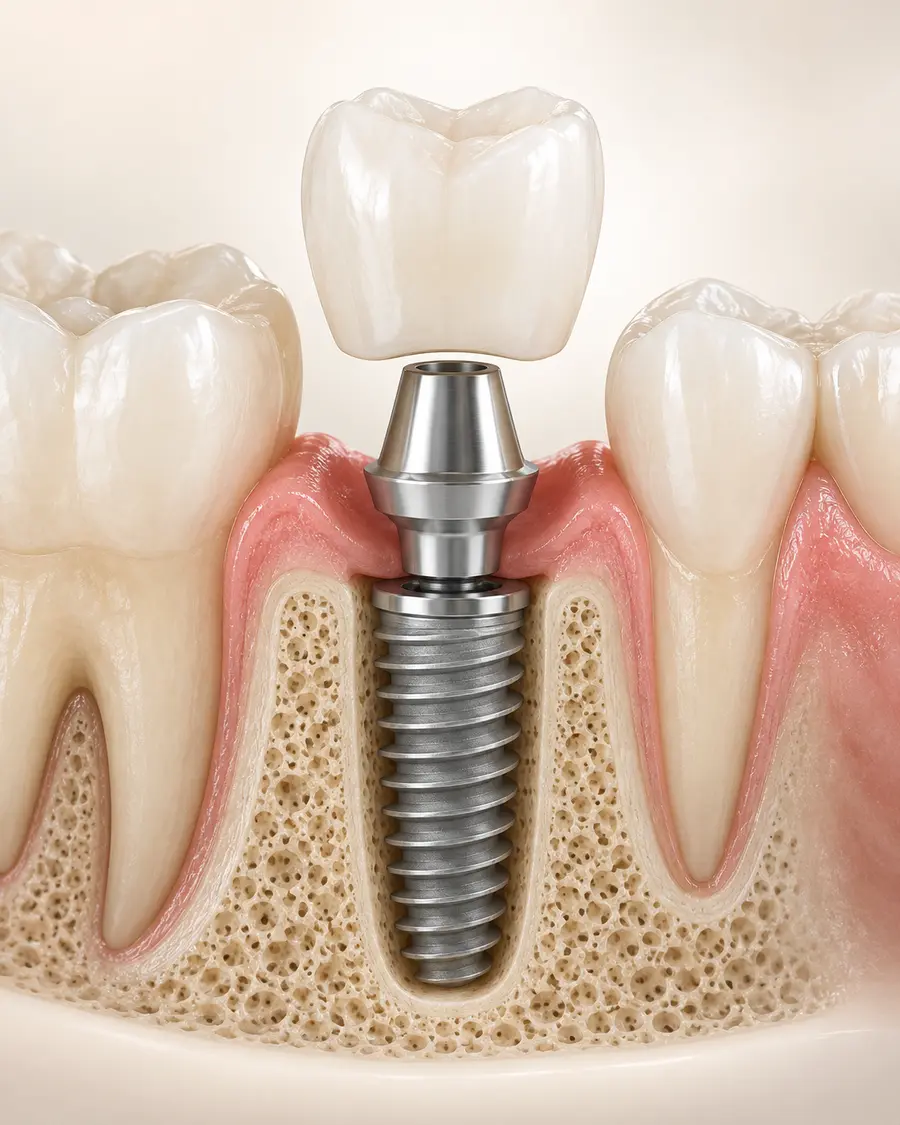
First Week
Eat soft foods, avoid the surgical site when brushing, no smoking, and take prescribed medication. See implants.
Healing
Osseointegration takes 3–4 months before the final crown.
The First 48 Hours Decide the Outcome
A blood clot forms at the implant site and must be protected. For the first two days: do not rinse forcefully, do not spit, do not use straws, and do not smoke. Bite gently on the gauze for the time your surgeon specifies, and keep your head slightly elevated when sleeping.
Apply cold packs in cycles of about twenty minutes on, twenty off, for the first day. Swelling peaks around day two to three and then subsides — see swelling after dental surgery.
Eating and Drinking
Cool, soft food for the first few days: yoghurt, eggs, soup that is not hot, mashed vegetables, protein shakes. Chew on the opposite side. Avoid anything hard, crunchy, seeded or very hot, and avoid alcohol while taking antibiotics or strong painkillers.
Return to a normal diet gradually over one to two weeks. Detailed guidance in what to eat after a dental implant.
Cleaning Without Disturbing the Site
Brush your other teeth normally from day one — a clean mouth heals better. Around the surgical site, avoid the toothbrush for the first days and instead use the antiseptic rinse your surgeon prescribes, from day two, letting it sit rather than swishing hard.
Once the tissue has closed, clean around the healing abutment gently with a soft brush and, later, interdental brushes. Plaque around an implant is the origin of peri-implantitis.
Smoking: The Single Largest Risk You Control
Nicotine constricts blood vessels and impairs the bone healing that osseointegration depends on. Smokers show markedly higher rates of early implant failure. Most surgeons ask for abstinence for at least several weeks before and after surgery. This is not a moral instruction; it is the difference between an implant that integrates and one that does not.
What Is Normal — and What Is Not
Normal: swelling peaking on days 2–3, mild bruising, oozing on the first day, discomfort controlled by prescribed painkillers, a metallic taste.
Call your dentist: pain that worsens after day three rather than improving; fever; pus or a foul taste; bleeding that does not stop with pressure; numbness that persists beyond the anaesthetic; a healing cap that comes loose; or a wobbly implant. Compare with the signs of a failing implant.
The Long Game
Osseointegration takes 3–6 months. During that window the implant carries no chewing load unless your surgeon has explicitly allowed it. See the healing timeline.
Afterwards, the implant needs the same lifelong care as a natural tooth: daily interdental cleaning, six-monthly professional cleaning, a night guard if you grind. Published survival is around 92–97% at ten years — and hygiene is the largest variable you control. See success rates.
This page provides general information and does not replace professional dental advice. Follow the specific instructions given by your treating dentist.
Frequently Asked Questions
Get your free dental assessment
Send photos for a personalised plan and quote — no obligation.
Get a Free Hair Analysis
Talk to our specialist for personalized planning and pricing.