
Dental Implant Success Rate
How successful implants are and what affects it.
Dental implants have a success rate of around 95–98% in healthy patients treated by experienced clinicians.
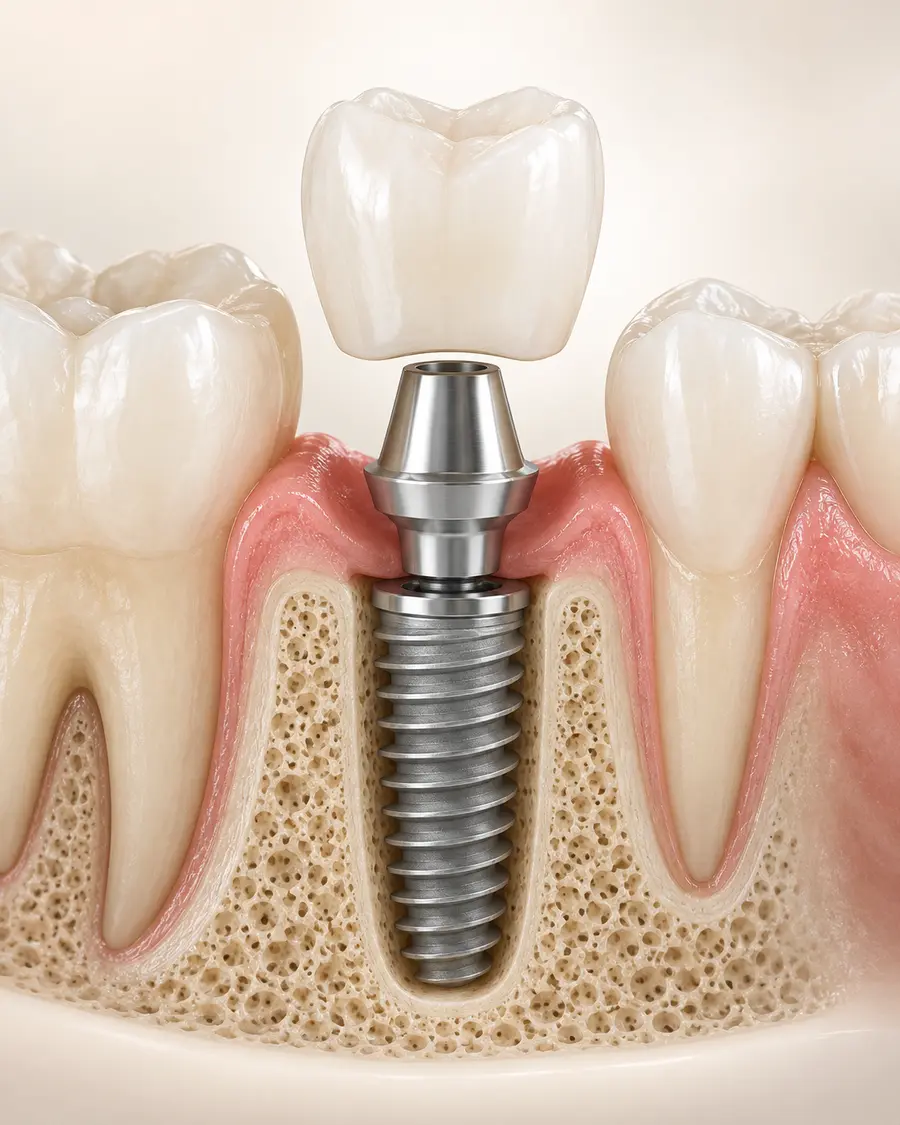
What Affects Success
Bone quality, oral hygiene, not smoking and surgeon skill. See implants.
Long-Term
With good care, implants can last a lifetime.
“Success” and “Survival” Are Not the Same
Survival means the implant is still in the mouth. Success is stricter: the implant is stable, pain-free, free of infection, with minimal bone loss around it. A study reporting 97% survival may report lower success.
Published figures: implant survival around 92–97% at ten years and roughly 92% at twenty years; success rates of about 90–96% over ten years. When you read a headline number, ask which it is.
What Raises and Lowers the Odds
Smoking is the strongest modifiable factor — smokers develop implant complications several times more often, and nicotine impairs the bone healing on which the implant depends. Uncontrolled diabetes, poor oral hygiene and untreated bruxism also reduce survival.
On the clinical side: bone volume and density, correct three-dimensional positioning, adequate healing time, and the experience of the surgical team. Where bone is thin, bone grafting or a sinus lift is required first — skipping this is a common cause of failure.
Early Failure vs Late Failure
Early failure occurs within the first 3–6 months: the implant never integrates with bone. Causes include infection, overheating of bone during drilling, insufficient primary stability, smoking, and loading the implant too soon.
Late failure occurs after successful integration, usually from peri-implantitis (inflammatory bone loss driven by plaque) or mechanical overload. Late failure is largely preventable with hygiene and regular check-ups. Learn to recognise the signs of a failing implant.
How to Protect Your Implant
Do not smoke. Attend check-ups every six months and have the implant professionally cleaned. Wear a night guard if you grind. Treat gum disease on the remaining teeth — peri-implantitis rarely appears in a healthy mouth. Follow the healing protocol described in our implant healing timeline rather than rushing the final crown.
Ask your clinic for the implant brand and batch number. Established systems remain available worldwide, so any dentist can order matching components years later — see implant brands compared.
This page provides general information and does not replace professional dental advice. Always consult a qualified dentist about your individual case.
Frequently Asked Questions
Get your free dental assessment
Send photos for a personalised plan and quote — no obligation.
Get a Free Hair Analysis
Talk to our specialist for personalized planning and pricing.